
Researchers from IIT Bhubaneswar and Virginia Commonwealth University have theoretically predicted a new two-dimensional material, a FeCl3 monolayer, exhibiting i-wave altermagnetism. This discovery holds significant potential for developing faster, more compact, and energy-efficient electronic devices, including applications in high-density memory, spintronics, and quantum technologies.

Six faculty members from IIT Madras have been awarded the prestigious ANRF J C Bose Grant, recognising their outstanding research contributions in engineering and science. The highly competitive grant provides Rs 25 lakh annually for five years to support frontier research.

Foreign Currency Non-Resident (Bank), or FCNR (B), deposits mobilised under the Reserve Bank of India's (RBI's) concessional swap facility may have already surpassed the amount raised during the 2013 scheme in just about 45 days, prompting SBI Research to sharply raise its estimate for inflows under the facility to $65-70 billion.
Indian researchers from ICMR-National Institute for Research on Women's Health and IIT Bombay have developed an indigenous "placenta-on-chip" platform. This microphysiological system mimics the human placental barrier, reproducing essential functions like hormone production and nutrient transfer. It offers a simple, scalable tool for studying placental biology, pregnancy complications, and drug effects, aiming to reduce reliance on animal experimentation.

Researchers at IIT Kanpur have found that 20 per cent ethanol-blended petrol (E20) does not significantly reduce fuel efficiency or harm vehicle engines, contradicting social media claims and providing reassurance amidst its nationwide rollout. The study supports the Oil Ministry's stance on E20's benefits.
Researchers at MIT World Peace University (MIT-WPU) Pune have developed a new protective enclosure for industrial abrasive saw machines. This innovative technology significantly reduces noise levels by up to 20 dB(A) while also containing sparks, dust, and flying debris, enhancing worker safety and welfare.

E-Eye, which cost about Rs 3,500 to develop, can test a sample for around Rs 2, making it particularly suitable for field-level water quality monitoring in areas where access to sophisticated laboratories is limited.

Researchers at IIT Bombay have developed a novel, low-cost, and highly durable catalyst using cobalt, nickel, phosphate, and graphite. This breakthrough material can accelerate both hydrogen and oxygen generation from water, significantly reducing the production cost of green hydrogen by eliminating the need for expensive noble metals like platinum and iridium.
Researchers at IIT (ISM) Dhanbad have developed an ultra-compact wearable antenna, measuring just 5x5x0.75 mm, designed to significantly enhance the performance of future healthcare devices, smart wearables, and wireless body communication systems. This innovation offers high-speed data transmission, wider wireless coverage, and a low Specific Absorption Rate (SAR), making it safe and efficient for prolonged use in Wireless Body Area Networks (WBANs).
The ACSEL Technology Forum, a Karnataka government Centre of Excellence in AI, has launched Tathyakosh.in, a digital public good designed to make India's extensive public data more accessible. This platform consolidates over 1.5 million datasets from 458 sources, addressing the challenge of fragmented data discovery across various government and research portals. It aims to benefit researchers, startups, and technology teams in sectors like healthcare, agriculture, and financial inclusion by providing a structured and discoverable data infrastructure.
A one-day patent workshop was held at CSIR-NIIST to promote intellectual property awareness and equip researchers and startups with essential knowledge in patent filing and innovation.
AI4Bharat at IIT Madras and Josh Talks AI have launched 'Voice of India', a multimodal AI evaluation platform designed to assess AI systems against Indian conditions, languages, accents, and dialects. This platform aims to provide scientifically rigorous, India-specific evaluations, covering areas like Voice AI, large language models, document processing, safety, cultural appropriateness, and Indian legal reasoning, to build trust and enable informed deployment decisions.

Built as an expendable, short-duration turbojet engine for single-mission applications, it can power tactical cruise missiles, anti-ship missiles, and long-range loitering munitions.

The Delhi government is set to introduce a comprehensive drone policy aimed at creating over 1,000 jobs and regulating drone operations. The policy will focus on establishing research clusters, flight testing facilities, and providing subsidies, while also addressing drone usage for government purposes like traffic management and surveillance, considering the city's extensive 'no drone zones'.

The National Testing Agency (NTA) is undergoing significant reforms, including the removal of over 50 staff members and the onboarding of new leadership and domain specialists. This comes after recent issues like errors in UGC-NET papers, leading to re-tests, and the cancellation of NEET-UG 2026. The Education Ministry has directed a complete overhaul of exam protocols and a thorough audit of all processes to ensure integrity.
Researchers at IIT Indore have developed a groundbreaking method to convert carbon dioxide and glycerol, two common waste materials, into valuable green chemicals like lactic acid and formic acid in just seven minutes. This low-energy process uses a specially designed ruthenium-based catalyst and microwave heating, offering a sustainable solution for waste management and green manufacturing.

SEBI Chairman Tuhin Kanta Pandey stated that cybersecurity is now a board-level concern, not just an IT challenge, emphasising the need for caution when deploying artificial intelligence in critical infrastructure. He highlighted that AI for cybersecurity must be secure, governed, and accountable, and also addressed the emerging risks from quantum computing, urging collective resilience and sharing of best practices among regulators.

India's Ambassador to the US, Vinay Mohan Kwatra, has clarified that the recent amendments to the Foreign Contribution (Regulation) Act (FCRA) are primarily aimed at enhancing transparency and ensuring accountability in foreign financial flows.

The overhaul comes after a series of controversies surrounding the conduct of examinations administered by NTA, which has faced questions over examination security and its handling of irregularities.
IIT Madras is hosting the 3rd Digital India RISC-V (DIR-V) Symposium 2026 in partnership with the Ministry of Electronics and Information Technology and RISC-V International. The symposium aims to unite stakeholders from government, industry, and academia to advance India's semiconductor innovation, focusing on indigenous processor technologies, secure computing, hardware innovation, and AI, aligning with the government's vision for India as a global semiconductor hub.

'As long as the vehicle has a flex engine, it is irrelevant if the mixture is 15 per cent or 30 per cent; the performance is the same.'
The Sports Authority of India (SAI), in collaboration with the Indian Council of Medical Research (ICMR), conducted a workshop on Good Clinical Practice (GCP) to strengthen ethical sports science research.
Microsoft has launched its fourth cloud region in India, located in Hyderabad, significantly expanding its hyperscale cloud presence. This move is part of a USD 20.5-billion investment in India's digital and AI infrastructure, aiming to support the country's rapid digital growth and meet increasing demand from major enterprises.

Selected students will receive Rs 1.5 lakh per year to cover academic expenses such as tuition fees, hostel charges, books, stationery, laptops, internet and transportation.
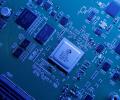
The Indian government has approved two major manufacturing initiatives worth nearly Rs 1.9 lakh crore (USD 22 billion) to expand the country's semiconductor ecosystem and scale up mobile phone production, aiming to strengthen its position as a global electronics manufacturing hub.
The Environment Ministry has designated the Natural History Museum (NHM) in Mizoram as India's 21st designated repository, significantly enhancing the country's biodiversity conservation and scientific infrastructure, particularly within the Indo-Burma Biodiversity Hotspot.
Digital payments firm PhonePe has launched PulsePro, an enterprise intelligence platform providing businesses with aggregated and anonymised transaction data. This platform offers near real-time market insights at granular levels, helping companies track consumer spending, identify growth opportunities, and make informed expansion decisions across India.
A new study reveals that insects' lightning-fast reactions are due to a 'turbo boost' feature in their brains, which could inspire more energy-efficient robots and self-driving cars.

Karnataka Chief Minister D K Shivakumar announced the establishment of India's first government-driven Artificial Intelligence University and an AI Hub in Bengaluru. This initiative aims to position Karnataka as a global leader in responsible AI innovation, fostering talent, research, and collaboration. The state seeks to become an AI-native state, leveraging AI to improve governance and daily life across various sectors.

The government introduced the SHANTI Act, 2025, to support the mission and open the sector to private participation.

India's position appears to be anchored around three red lines: Hasina's safety and the guarantee of a fair trial; assurances that Bangladeshi territory will not be used for activities hostile to India; and the restoration of an inclusive democratic process in Bangladesh.

A sophisticated cross-bank syndicate is systematically defrauding non-resident Indians (NRIs) and elderly citizens by exploiting their fixed deposits through forged documents and fictitious loans, often involving colluding bank employees and real estate deals.

Go once. You will know, even before you board the flight home, that you will return.

The aim is to win over the country's enterprises, developers and startups as AI systems shift from answering questions to autonomously executing tasks.
Researchers have found that brainwave synchrony between individuals can be used to guide and improve social interactions, potentially "engineering" social connectedness. Studies involving thousands of participants, including collaborations with musicians and artists, demonstrated that being "on the same wavelength" is linked to healthy social relationships and can be boosted through interventions. This phenomenon, termed 'social synchrony', aligns brain, body, and language rhythms, playing a crucial role in social cohesion and learning.
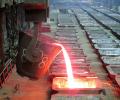
Hyderabad-based Nexon Geochem has partnered with Russia's Giredmet to establish integrated rare-earth processing and downstream facilities in India. This collaboration aims to bridge critical gaps in India's rare earth value chain, focusing on producing NdFeB permanent magnets essential for electric vehicles, wind turbines, and defence systems, reducing reliance on imports.

As many as 274 fugitives have been repatriated from 36 countries in the last 7 years, an average of around 40 per year and a 10-fold jump from the 2004-13 period when around four fugitives were brought back every year, the government said on Tuesday.

Sheikh Mohammad Abdullah's dismissal and arrest on August 9, 1953 marked a decisive shift in the Centre-J&K power equation. Seven decades later, the erosion of the state's special constitutional position culminated in the August 5, 2019 changes, notes Mohammad Sayeed Malik, the distinguished commentator on Kashmir affairs.

The Indian government has defended its E20 ethanol blending programme, stating that extensive testing and field experience show no evidence of abnormal engine wear, corrosion, or reduced vehicle life, despite a potential 2-6% reduction in fuel economy.
Researchers at CSIR-CIMFR have developed India's first mobile Smart Algal Liquid Tree (SALT), an innovative air-purification system using microalgae to absorb CO2 and release oxygen. Designed for polluted urban areas, this compact unit offers a sustainable solution where conventional tree planting is challenging, also providing public utility features.
